

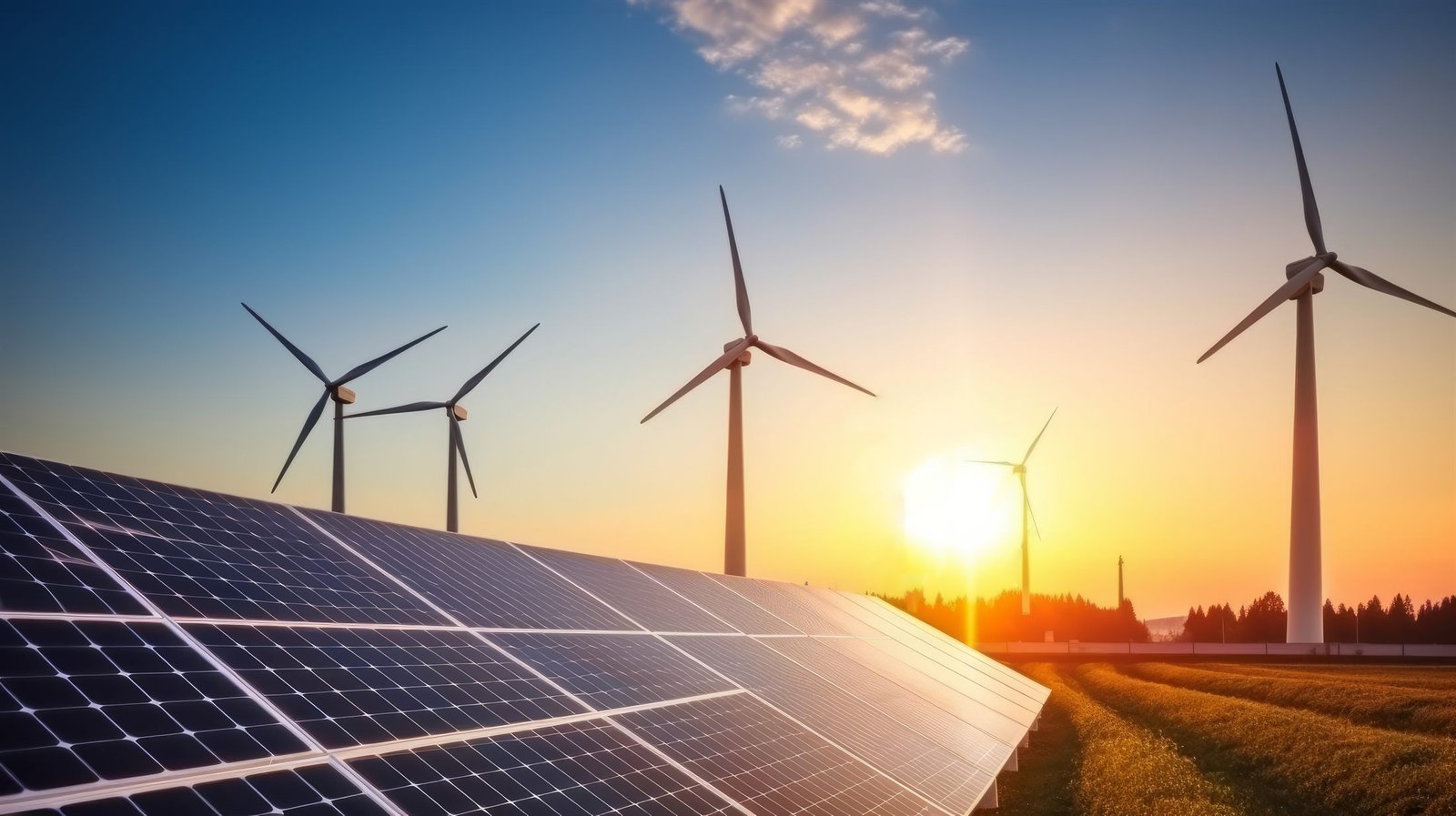
Photovoltaic Solutions
Renewable energy has become essential to sustainable development. By harnessing wind, water and sunlight, society can grow while protecting the planet for the generations that follow.
Advantages
A direct, measurable reduction in the emissions driving climate change.
Falling generation costs that make clean power increasingly competitive.
Greater independence and reduced dependence on imported fossil fuels.
In step with global sustainability policy and the path to net-zero.
Photovoltaic solar energy
The construction of large-scale solar farms has amplified its impact worldwide, turning sunlight into a serious, utility-scale power source.
Did you know
trees planted annually, the equivalent of a single megawatt of solar energy.
PER 1 MW
the scale of the largest solar farms already built around the world.
SINGLE SITE
homes powered with clean energy by just 10 MW of solar capacity.
PER 10 MW
Applications
Photovoltaic systems divide into off-grid and grid-connected installations, and they serve a remarkably wide range of uses, on the ground and beyond it.
Key installation elements
Solar cells connected and encapsulated together, converting solar radiation (photons) directly into electrical energy.
Manages the charging and discharging process, protecting the installation from damage over its service life.
Batteries convert and store the electricity generated by the panels, delivering it for consumption exactly when it is needed.
Solar farms
Solar farms use hundreds of thousands of panels to produce direct current (DC), which inverters convert into alternating current (AC) for consumption. According to IRENA, over 20 GW of photovoltaic capacity was installed across Latin America in 2024 alone (4.4% of the global total) with close to 10,000 solar farms now operating in 148 countries. Latin America stands out as a region of enormous potential.
Engineering studies for solar farms
Using data from the preliminary studies to determine steel grade, length and dimensions, factoring in corrosion, dead load, live load, wind load and seismic conditions.
Determining the soil properties at the site where the steel profiles will be driven to support the PV modules.
Assessing precipitation levels to guide proper land preparation and prevent water erosion across the site.
Gathering wind-gust data to inform the correct selection of steel support-profile sizes.
Conducted on-site, driving profiles into the ground and applying simulated service loads to measure displacement and verify performance.
KOX Energy services
Creation and consulting review of design basis; structural design parameters and load reports; site-specific seismic and wind studies; support-structure design for fixed and tracking panels.
ExploreStructural calculation reports; scope development for geotechnical, topographical, hydrological and pull-out tests; foundation analysis and design for fixed and tracking systems.
ExploreSite corrosion-aggressiveness analysis; general foundation and structural layouts; slope analysis and site topography; pull-out (POT) tests.
ExploreFrom design basis and site studies to foundation design and field testing, KOX Energy delivers the specialized engineering that gets photovoltaic projects built.
Build with certainty
Legal
The information provided on this page is intended for general informational purposes only. Some content may reference or summarize information originating from external authors or published technical standards. While KOX Energy strives to ensure the accuracy and relevance of the information presented, the technical information, procedures, applications and recommendations may not apply to all equipment, operating conditions or any specific project.